Buying land for the first time is an exciting journey, but it's also one fraught with potential mistakes. Novice buyers often navigate this complex process without the benefit of experience, which can lead to costly errors. Understanding these common pitfalls can help you make informed decisions and ensure a successful land purchase.
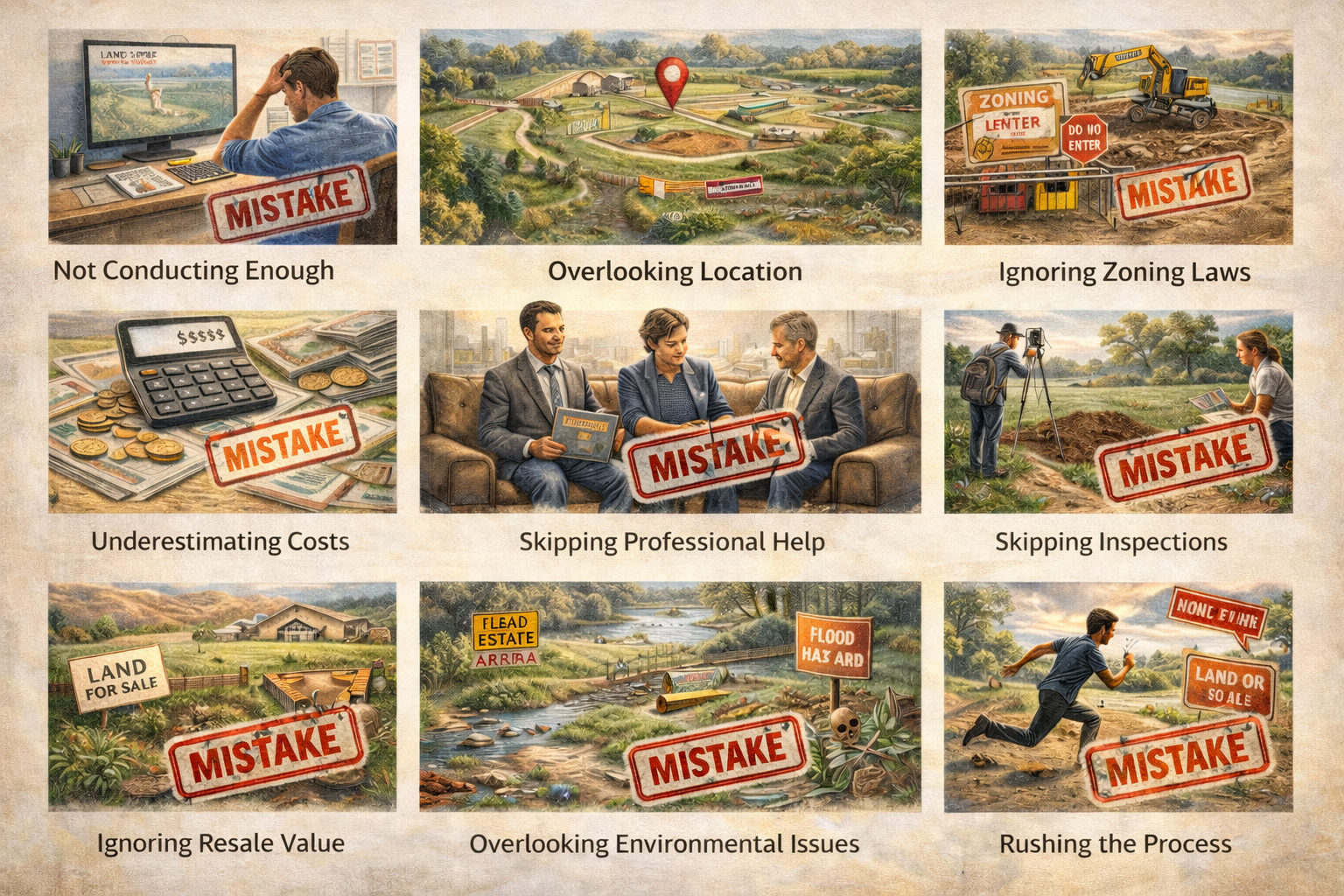
1. Not Conducting Enough Research
Many first-time buyers jump into land purchases without sufficient research. It's crucial to understand the market, zoning laws, property values, and future development plans in the area. Lack of research can lead to overpaying or buying land that doesn't suit your needs.
2. Overlooking the Importance of Location
Location is key in real estate. First-time buyers often underestimate the impact of location on the property's value and potential for development. It's important to consider factors like accessibility, proximity to amenities, and neighborhood dynamics.
3. Ignoring Zoning and Land Use Regulations
Zoning laws dictate what you can and cannot do with your land. Ignoring these regulations can result in legal issues and extra costs. Ensure you understand the zoning classifications and any restrictions before making a purchase.
4. Underestimating Costs
Beyond the purchase price, there are additional costs like property taxes, insurance, maintenance, and potential development costs. Failing to account for these expenses can lead to financial strain.
5. Skipping Professional Help
Not seeking professional advice is a common mistake. Real estate agents, attorneys, and surveyors can provide invaluable assistance and help avoid pitfalls.
6. Neglecting Property Inspections and Surveys
Skipping inspections and surveys to save money can lead to unforeseen issues like boundary disputes or land defects. It's vital to have a clear understanding of the land's condition and limitations.
7. Not Considering Resale Value
First-time buyers often don't consider the future resale value of the land. Investing in land with good potential for appreciation is crucial for long-term investment success.
8. Overlooking Environmental Restrictions and Hazards
Environmental restrictions and potential hazards like flood zones or contaminated soil can impact land use. These factors should be thoroughly investigated before purchasing.
9. Rushing the Process
Rushing into a purchase without due diligence can lead to regret. Take your time to understand every aspect of the deal.
10. Not Planning for the Long Term
Land is a long-term investment. Not having a clear plan for the land can result in underutilization and financial loss.
Final Thoughts
Avoiding these common mistakes can lead to a more rewarding and successful land buying experience. With thorough research, professional advice, and careful planning, first-time land buyers can make well-informed decisions.