Weighing the Options: Pros and Cons of Raw Land vs. Developed Property Purchase
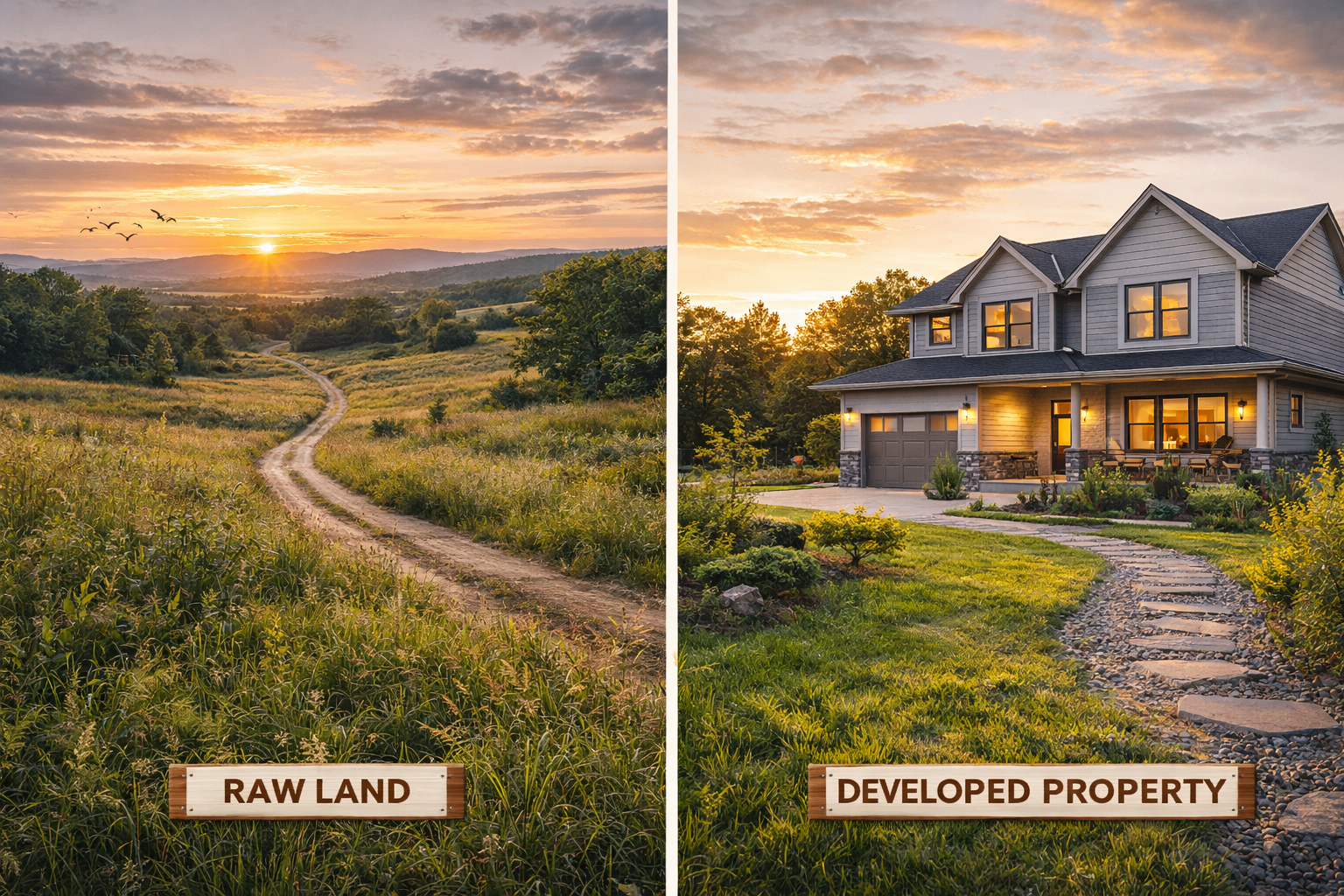
When delving into the realm of real estate, one of the fundamental decisions you'll face is whether to invest in raw land or opt for a developed property. Each choice comes with its own set of advantages and drawbacks. In this blog, we dissect the pros and cons of both options, providing insights to help you make an informed decision aligned with your goals and preferences.
1. Raw Land: Pros
Blank Canvas for Vision
Raw land offers a blank canvas for your vision. You have the freedom to design and develop the property exactly how you envision it, from the ground up.
Potential for Higher Returns
With strategic planning and development, raw land has the potential for higher returns on investment. As the property appreciates, so does your initial investment.
Lower Initial Cost
In many cases, raw land comes with a lower initial cost compared to developed properties. This provides an opportunity for entry into real estate at a more affordable price point.
2. Raw Land: Cons
Cost of Development
The cost of developing raw land can be substantial. Expenses for utilities, infrastructure, and obtaining necessary permits can add up quickly, impacting the overall investment.
Time Investment
Developing raw land requires time. The planning, approvals, and construction processes can be lengthy, delaying any potential returns on investment.
Market Uncertainty
The potential for higher returns comes with market uncertainty. Economic and market conditions can affect land values, posing a risk to the investment.
3. Developed Property: Pros
Immediate Use
Developed properties are ready for immediate use. This is advantageous for those seeking a home or commercial space without the time and effort required for ground-up construction.
Predictable Costs
Unlike raw land, developed properties come with predictable costs. You have a clear understanding of the property's value, and there are no surprises in terms of development expenses.
Established Infrastructure
Developed properties often come with established infrastructure such as roads, utilities, and landscaping, saving you the time and cost associated with creating these elements.
4. Developed Property: Cons
Limited Customization
The main drawback of developed properties is the limited scope for customization. You may need to compromise on certain features or designs that are already in place.
Potentially Higher Initial Cost
Developed properties typically come with a higher initial cost compared to raw land. The convenience of immediate use may come with a premium price tag.
Depreciation Over Time
While land tends to appreciate, structures on developed properties may depreciate over time, affecting the overall value of the investment.
In a nutshell,
The choice between buying raw land and a developed property hinges on individual preferences, goals, and risk tolerance. Whether opting for the potential of raw land or the convenience of a developed property, understanding the pros and cons is crucial for making a well-informed real estate decision aligned with your objectives.